

Key Takeaways
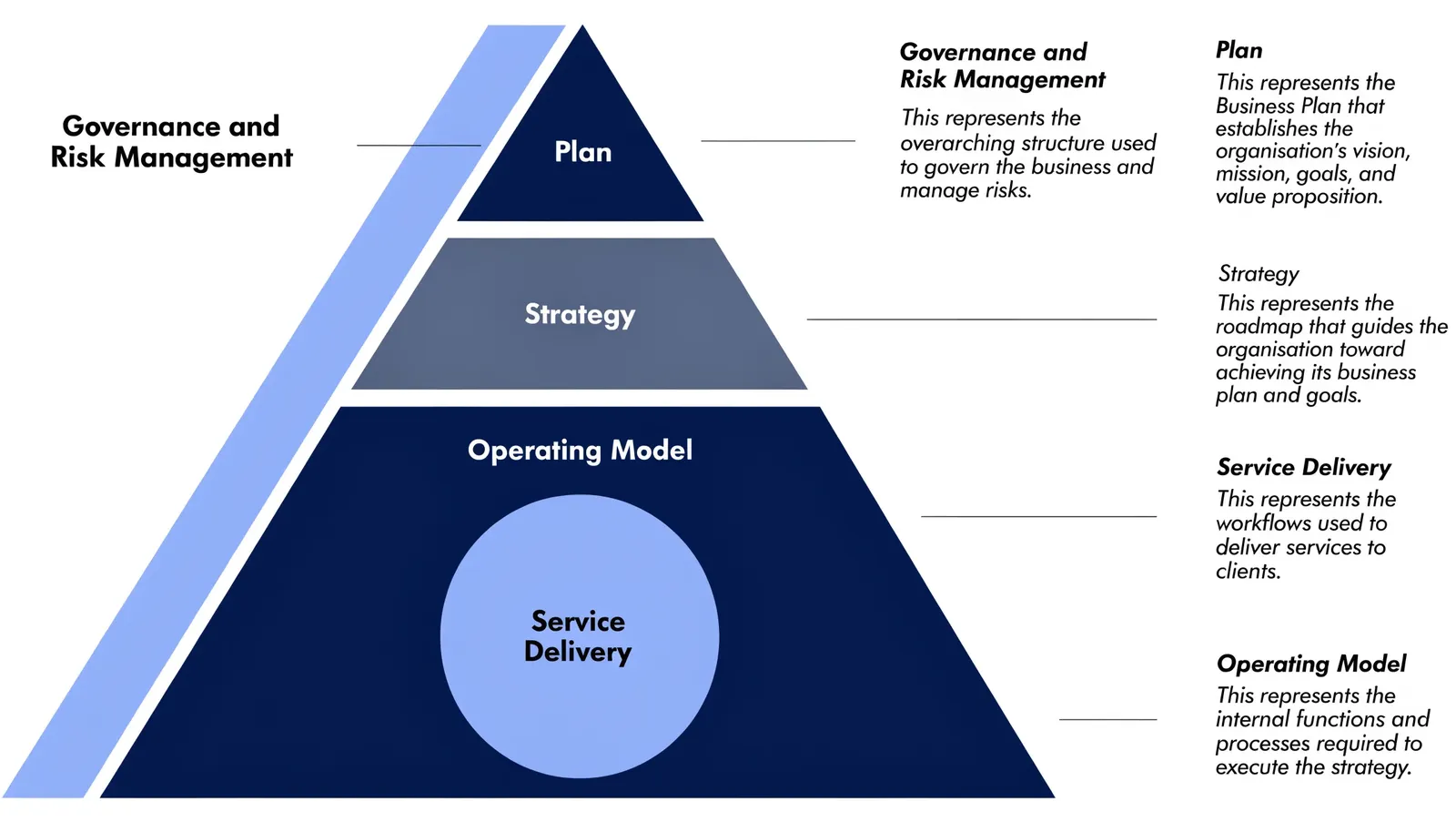
An operating model redesign is needed when governance, decision rights, processes, people, or technology no longer match the organisation's strategy and scale.
Common triggers include regulatory pressure, audits, leadership transitions, growth, new infrastructure or technology, mergers, and persistent performance issues.
Warning signs include unclear accountability, excessive escalations, duplicated activities, ineffective controls, and ongoing operational inefficiency.
Operating model design is distinct from organisational restructuring, service delivery redesign, and management system improvement, though the four are closely connected.
Redesign efforts fail most often when leaders change structure without addressing governance and culture.
What drives an operating model redesign?
Why do organisations outgrow their current operating model?
What typically triggers the need for a redesign?
Regulatory or audit pressure that exposes gaps between stated controls and actual practice.
Leadership transitions, where incoming executives need governance and reporting that match how they intend to run the organisation.
Growth or new service lines that outpace the structure originally built to support them.
New infrastructure or technology, which changes how work should be done and who should be doing it.
Mergers or restructuring, which create duplicate capabilities and unclear ownership.
Persistent service or performance failures, which signal that the current model no longer serves its purpose.
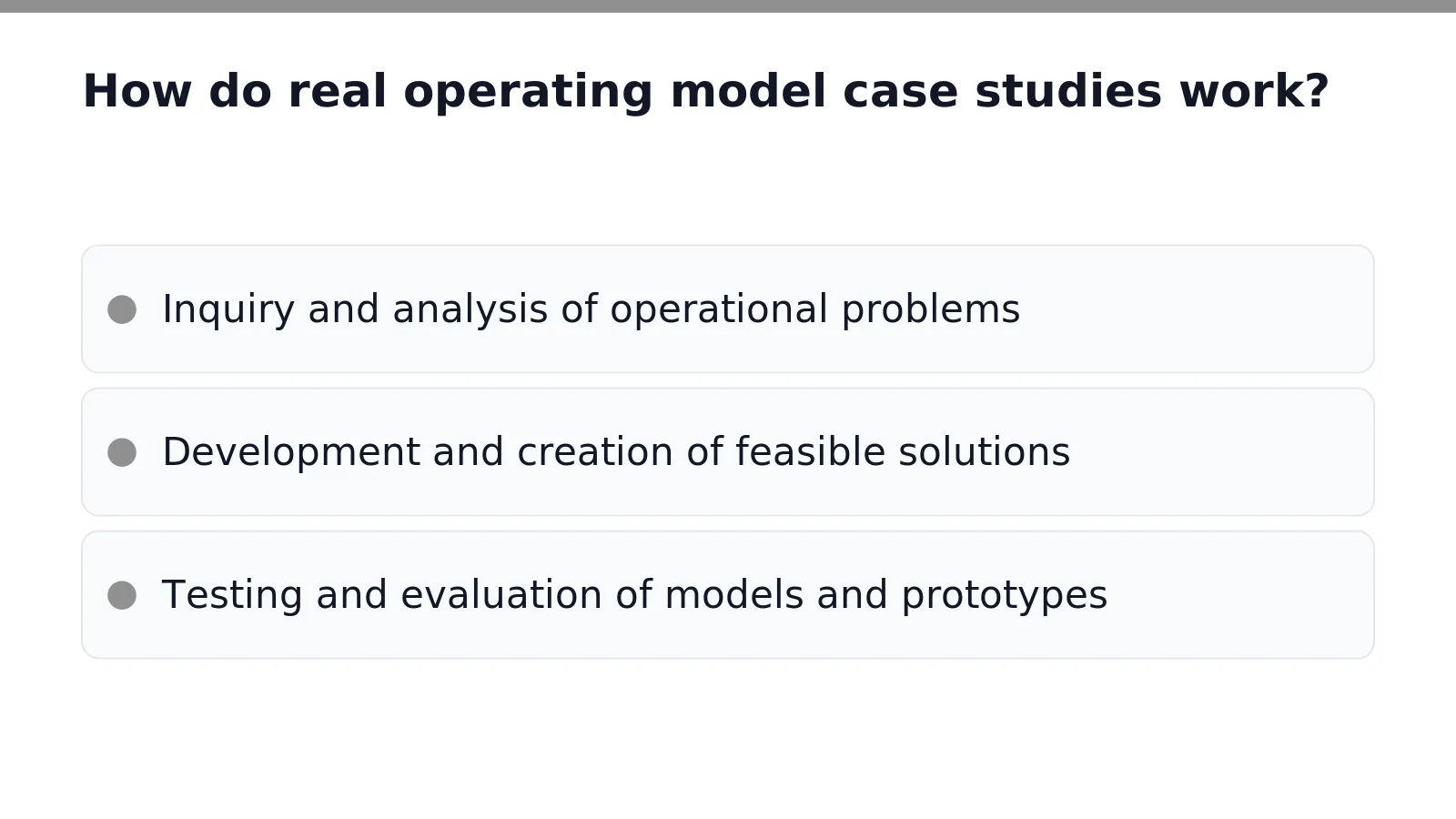
What warning signs indicate an operating model needs attention?
Unclear accountability, where decisions stall because no one is confident they own them.
Excessive escalations, with routine matters repeatedly pushed up to senior leaders.
Duplicated activity, where two or more teams unknowingly do the same work.
Ineffective controls, where policies and procedures exist on paper but are not followed in practice.
Operational inefficiency, visible in rework, delays, or rising cost-to-serve without a matching rise in output.
How Operating Model Design Differs from Restructuring
Operating model design addresses the whole system: governance, decision rights, people, process, technology, and service delivery, and how they work together.
Organisational restructuring changes reporting lines and team structures, typically a subset of a broader operating model.
Service delivery redesign focuses specifically on how a service is planned, delivered, and experienced by the people who use it.
Management system improvement strengthens the policies, procedures, and assurance activities that keep an organisation compliant and consistent.
How does compliance fit into operating model design?
Identify initiatives: assess the current operating model, including governance, planning, processes, technology, service delivery, and risk, to surface gaps and opportunities.
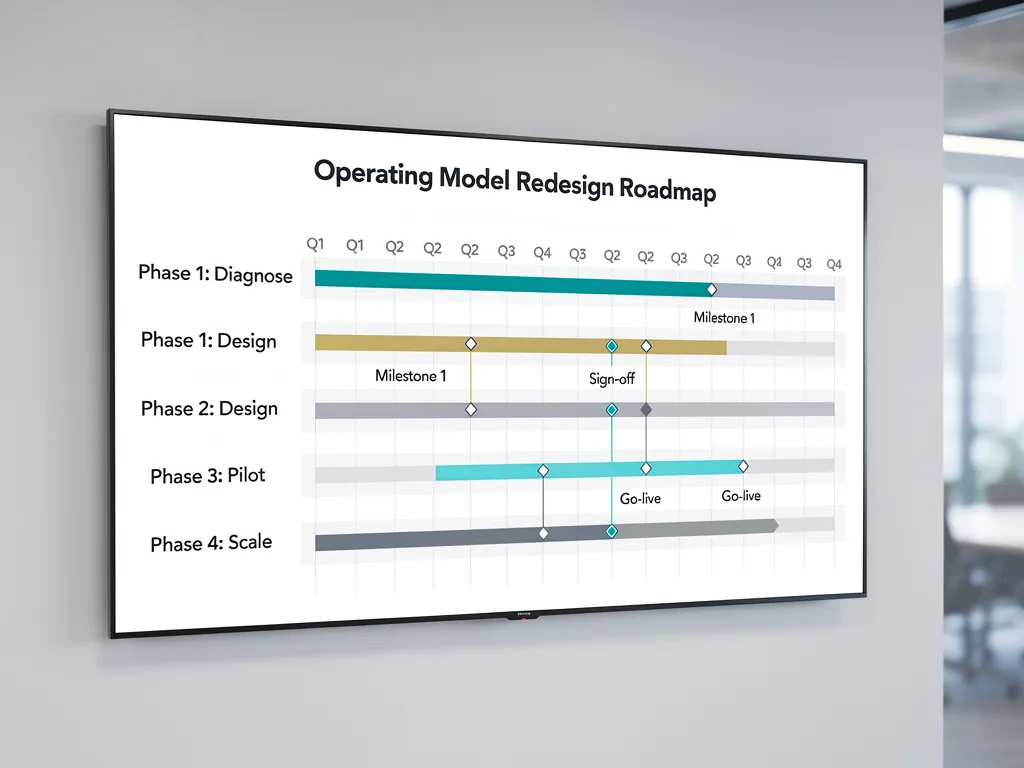
Develop strategy and plan: design the target operating model and a practical roadmap that defines priorities, sequencing, and implementation requirements.
Implement: support the rollout of process updates, governance structures, role clarity, service delivery arrangements, and supporting documentation.
Monitor and evaluate: establish review points and reporting rhythms to understand whether the model is working as intended.
Continual improvement: refine the operating model over time as performance insight, priorities, and technology maturity evolve.
Illustrative scenario: redesigning a mid-market operating model
What pitfalls derail operating model transformations?
Why do structural changes alone fail to deliver results?
How does a project mindset undermine a redesign?
How Integris Group Services supports an operating model redesign
Operating model design to define current-state gaps and the target-state model.
Policies, procedures and assurance consulting to make sure documentation and controls match how work actually happens.
Risk and opportunity management framework support to align risk management to the new operating requirements.
Conclusion