
Governance, Risk and Compliance
When Growth Creates Complexity
As organisations grow, managing projects can become increasingly complex.
More projects may be underway at the same time, priorities compete for resources, teams use different approaches, and leaders can lose visibility over progress, risks and outcomes.
A Project Management Office (PMO) can provide the structure needed to improve project governance, consistency and accountability.
However, a PMO should not simply create another layer of administration. It should help the organisation prioritise work, manage resources, strengthen governance and deliver projects more effectively.
What Is a Project Management Office?
A PMO provides a structured approach to how projects are governed, managed and reported.
Depending on the organisation, it may support:
- project governance and oversight;
- prioritisation and planning;
- consistent project management practices;
- resource management;
- risk and issue management;
- project reporting; and
- portfolio visibility.
The right PMO model depends on the organisation’s size, maturity, operating environment and strategic priorities and if you’re not sure where to begin, Integris Group Services PMO Consulting support can help organisations develop practical project governance and delivery structures suited to their operating environment.
Why Might an Organisation Need a PMO?

As organisations grow, project delivery can become fragmented.
Different teams may use different systems, reporting methods and governance arrangements, making it difficult for leadership to understand what is happening across the organisation.
A PMO can help leaders answer important questions:
Which projects are our priorities?
Are they aligned with our strategy?
Do we have the resources to deliver them?
Where are our major risks and dependencies?
Which projects require intervention?
The purpose is to create greater visibility and consistency without taking responsibility away from the people delivering the work.
Step 1: Understand What the PMO Needs to Solve
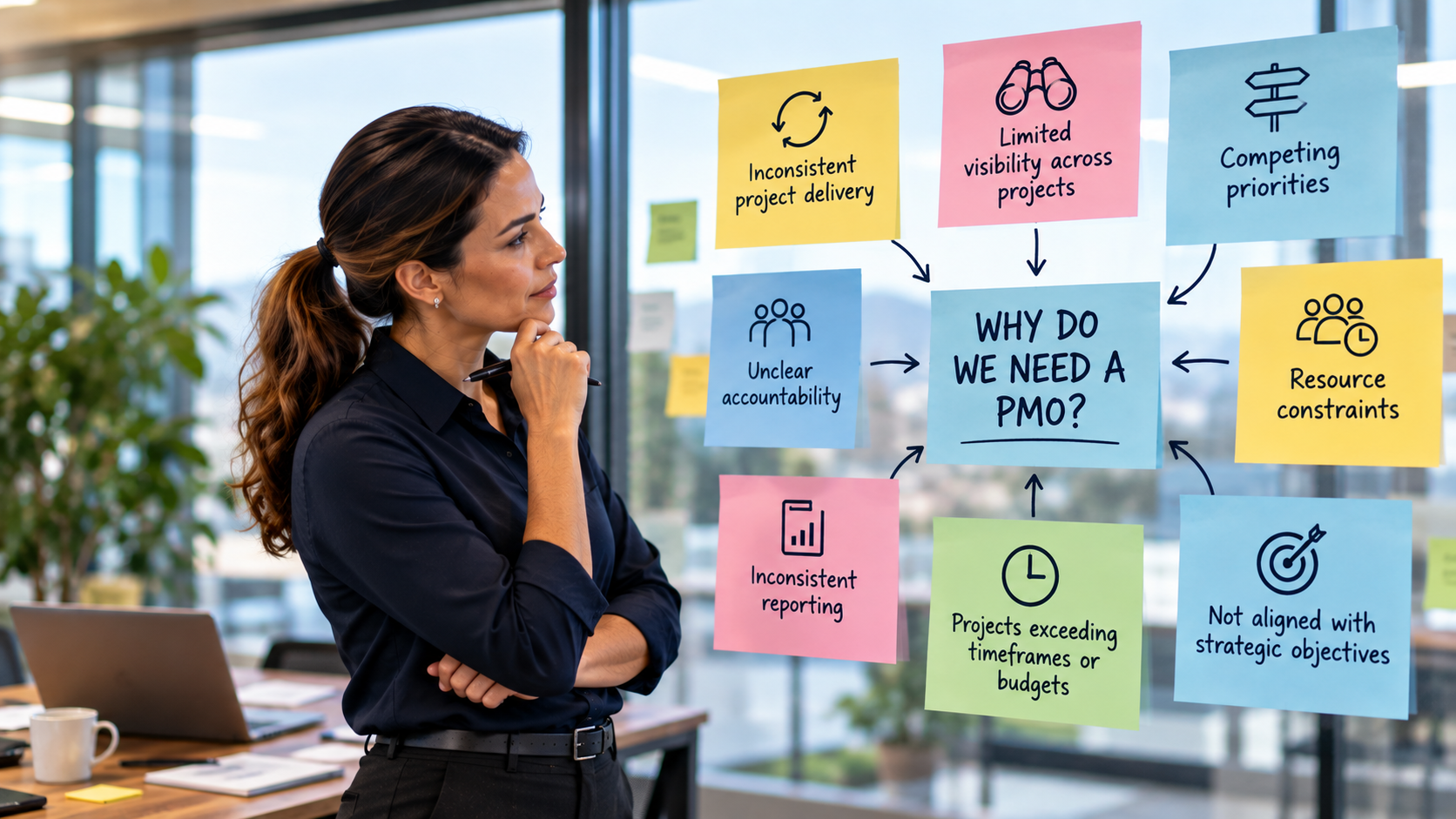
Before establishing a PMO, identify the magnitude of problems it needs to address, which are worthwhile being stood-up as projects.
These might include inconsistent project delivery, unclear accountability, competing priorities, resource constraints, limited reporting or projects regularly exceeding expected timeframes, but it can also spawn from projects that have change management issues or due to a workforce suffering from change fatigue.
Understanding these challenges first allows the PMO to be designed around the organisation’s actual needs rather than adopting a generic model, and our Project Management and Change Management Support services can help ensure this is done in a considered way.
Step 2: Establish Clear Governance

Define how projects will be governed and who has authority to make decisions.
Consider:
Who approves projects?
Who determines priorities?
Who owns each project?
How are risks and issues escalated?
What information does leadership need?
Clear governance strengthens accountability and helps ensure decisions are made at the appropriate level.
Step 3: Create Consistent Project Practices

Projects do not need to be identical, but they should operate within a consistent framework.
This might include agreed approaches for project initiation, planning, risk management, reporting, change control and project closure. The PMO should also ideally make these available for the organisation to use, so that responses are standardised, and the PMO doesn’t need to follow-up on each project for clarity as team members are working with different versions of reports.
Templates and review processes should make project management easier — not create unnecessary administration.
Step 4: Connect Projects With Strategy

A strong PMO helps ensure projects contribute to organisational priorities.
Before committing resources, consider:
What strategic objective does the project support?
What benefits are expected?
How important is it compared with other initiatives?
Does the organisation have the capacity to deliver it?
This helps organisations prioritise projects based on strategic value rather than simply managing projects individually.
Are your projects aligned with your organisation’s priorities?
Integris Group Services can help strengthen project governance, improve visibility and establish practical PMO structures that support better decision-making and delivery.
Step 5: Improve Portfolio Visibility
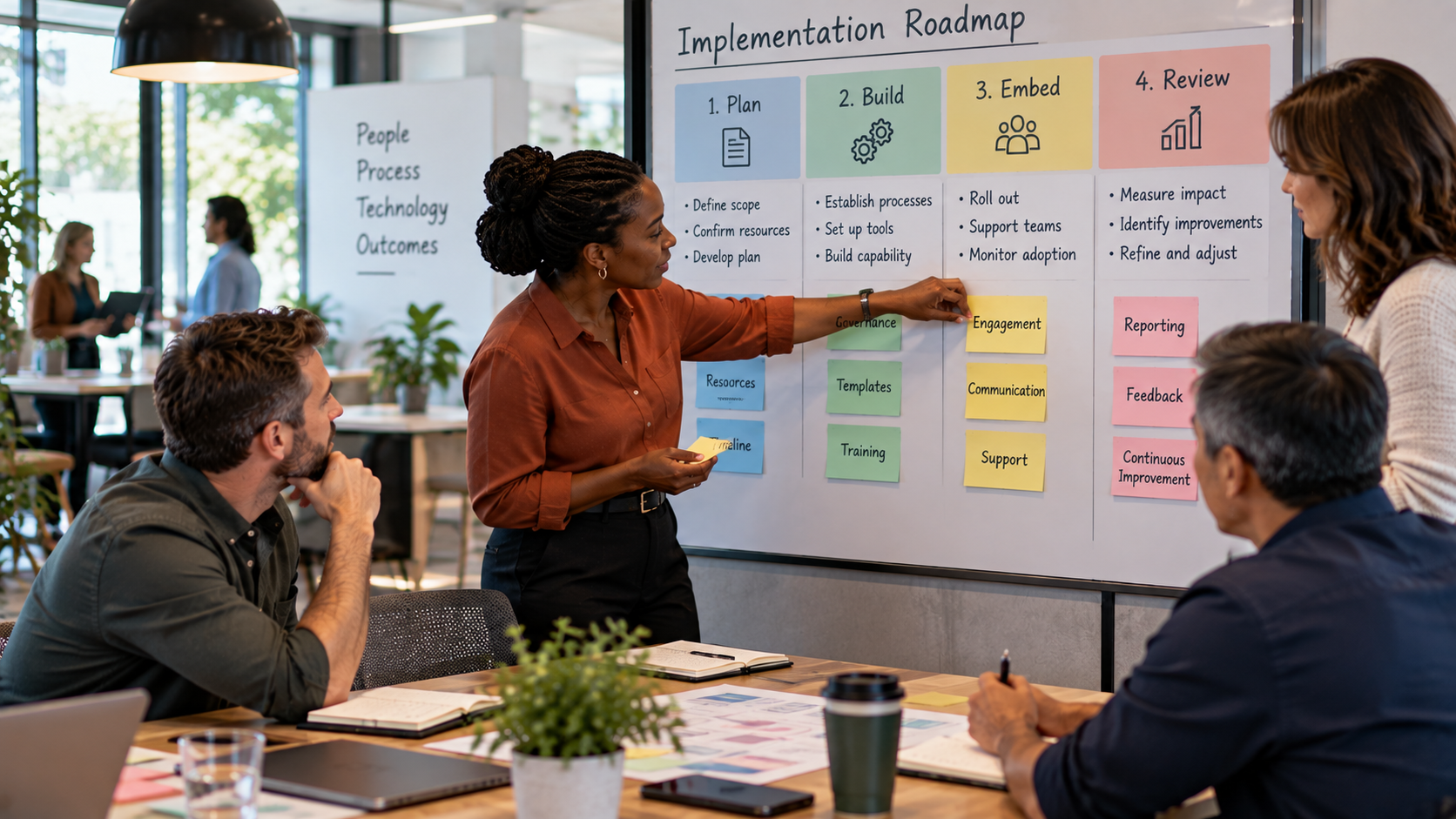
Leadership needs reliable information to make informed decisions.
A PMO can provide consistent visibility across:
progress, milestones, resources, risks, issues and dependencies.
Reporting should focus on information that supports decisions rather than reporting simply for the sake of process.
Step 6: Consider the People Impact

Projects often introduce new systems, processes, responsibilities and ways of working.
Successful project delivery therefore requires more than completing project tasks. Organisations also need to consider how changes will be communicated, adopted and embedded.
IGS Change Management support can help organisations address the people, capability and implementation requirements associated with organisational change.
Connecting project management with change management can help project outputs become sustainable operational outcomes.
A Practical PMO Framework
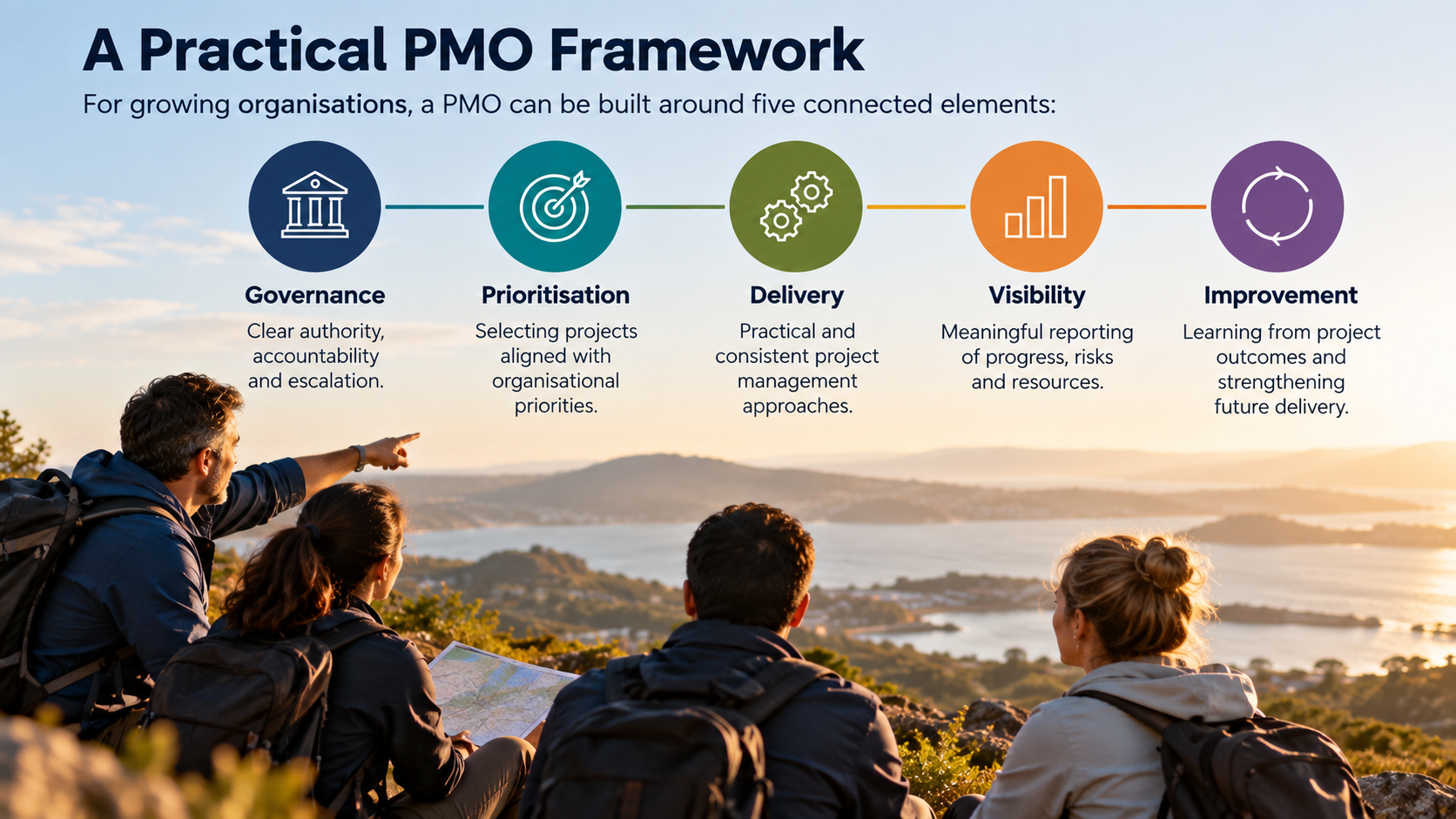
For growing organisations, a PMO can be built around five connected elements:
Governance — clear authority, accountability and escalation.
Prioritisation — selecting projects aligned with organisational priorities.
Delivery — practical and consistent project management approaches.
Visibility — meaningful reporting of progress, risks and resources.
Improvement — learning from project outcomes and strengthening future delivery.
The framework should evolve as the organisation’s project maturity and needs change.
A PMO Should Enable Delivery, Not Bureaucracy

A PMO is not simply another administrative function.
Done well, it provides people with the structure, information and governance needed to deliver important work successfully.
For growing organisations, the right PMO can improve visibility, strengthen accountability, support better resource decisions and create greater consistency across projects.
Most importantly, it helps connect strategy with execution.
Need to Strengthen Your Project Management Framework?

Integris Group Services supports organisations to establish and improve practical project governance and delivery frameworks.
Our PMO Consulting services can help identify gaps, strengthen governance and develop project management arrangements suited to your organisation.
The objective is to create a framework that helps your organisation prioritise effectively, make informed decisions and deliver meaningful outcomes.
Frequently Asked Questions
What is a Project Management Office (PMO)?
A PMO provides a structured approach to how projects are governed, prioritised, managed and reported. It can help organisations improve consistency, accountability and visibility across multiple projects.
When should an organisation consider establishing a PMO?
A PMO may be beneficial when an organisation is managing multiple projects, experiencing competing priorities, struggling with resource capacity, using inconsistent project practices or lacking clear visibility of project performance and risks.
Does a PMO create more bureaucracy?
It shouldn’t. An effective PMO should provide enough structure and governance to support successful delivery without creating unnecessary administration. The framework should be proportionate to the organisation’s needs and project maturity.
How does a PMO help connect projects with organisational strategy?
A PMO can help organisations assess which projects support strategic objectives, understand expected benefits, prioritise competing initiatives and determine whether sufficient resources and capacity are available to deliver them.
What should a practical PMO framework include?
A practical PMO framework can include five connected elements: governance, prioritisation, delivery, visibility and improvement. Together, these help organisations strengthen decision-making, manage projects consistently and continually improve project delivery.
Ready to strengthen your project management framework?
IGS PMO Consulting can help you establish practical governance, prioritisation and delivery arrangements that connect strategy with execution and support meaningful outcomes.