
Internal Audit Services
Audit Readiness Is Built Before the Auditor Arrives
An audit should not be the point at which an organisation discovers whether its systems are working.
Yet audit preparation can easily become a last-minute exercise in locating documents, checking registers, closing overdue actions and preparing employees for questions.
That may help an organisation get through an audit.
It does not necessarily provide assurance that the underlying management system is effective.
A stronger approach treats internal and external audits as different parts of the same assurance environment.
Internal audit helps the organisation understand where its systems, controls and practices may need attention. External audit provides independent assessment against defined requirements.
For organisations pursuing or maintaining ISO certification, the distinction matters.
The objective should not simply be to pass the next audit.
It should be to build an organisation that is ready to demonstrate how its systems operate at any time

Internal and External Audits Serve Different Purposes
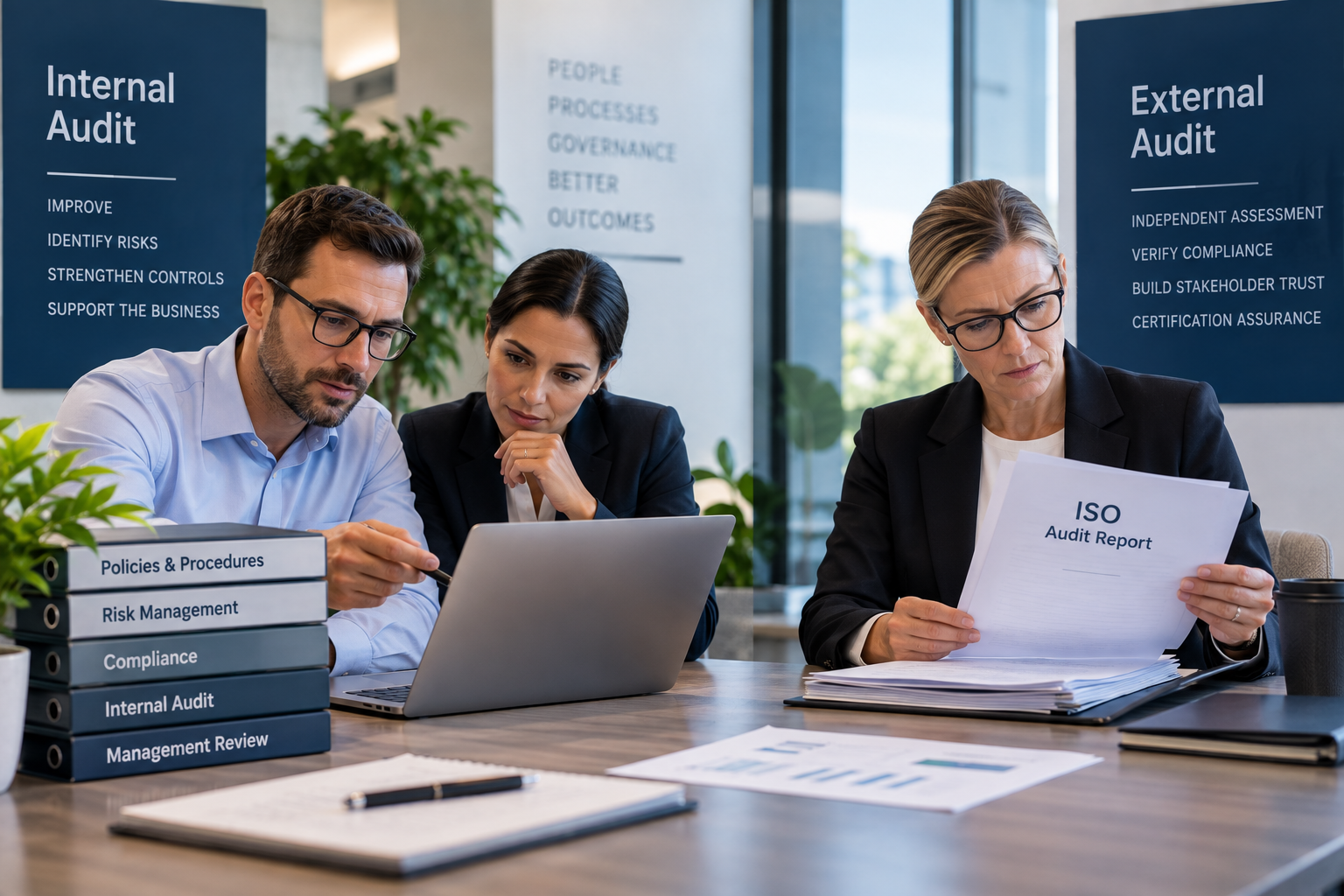
Internal and external audits both provide assurance, but they do so from different positions.
Internal audits provide an opportunity to examine whether systems, processes and controls are operating as intended and identify weaknesses before they become larger problems.
External audits bring independent scrutiny. In an ISO certification context, an external certification audit assesses the relevant management system against the applicable standard and certification requirements.
The practical distinction is important:
Internal audit asks: Are our systems working, and where can we improve?
External audit asks: Can we demonstrate conformity with the requirements being assessed?
Organisations need both perspectives.
How confident are you that your systems will stand up to independent scrutiny?
Strengthen your audit readiness before external assessment. Integris Group Services can help identify gaps, test controls and establish practical priorities for improvement.
Certification Readiness Is More Than Documentation
Having policies, procedures and records available is important.
But documentation alone does not demonstrate that a management system is embedded.
Auditors may need to understand whether responsibilities are clear, processes are followed, controls operate in practice, evidence is reliable and identified issues result in appropriate action.
This means audit readiness exists across the organisation — not simply within the compliance team.
Leaders should be asking:
- Do people understand their responsibilities?
- Can we demonstrate that key processes operate as intended?
- Are records current and accessible?
- Are nonconformities and improvement actions followed through?
- Can management demonstrate meaningful oversight?
- And does practice reflect what our documented systems say?
The gap between documented process and operational practice is often where audit exposure becomes visible.

Use Internal Audit as a Readiness Tool
An effective internal audit program should do more than replicate an external certification audit.
It should help the organisation identify where assurance is most valuable.
A risk-based approach can focus attention on significant processes, previous findings, organisational change, recurring weaknesses and areas where control failure could have greater consequences.
Internal audits can then provide an early opportunity to understand:
What is working?
Where is evidence weak?
Where does practice differ from documented requirements?
Which findings indicate a broader system issue?
This shifts internal audit from a compliance exercise to a tool for organisational improvement.
Want greater confidence that your internal audit program is testing what matters? The IGS Internal Auditing service can support risk-based audit planning, independent review and practical improvement.

A Practical ISO Audit Readiness Framework
Rather than preparing for certification through a single checklist, organisations can consider readiness across five connected areas.
1. Understand the Requirements
Identify the requirements relevant to the management system and determine how they apply to the organisation.
The important question is not simply whether a requirement has been documented.
It is whether the organisation can demonstrate how that requirement operates in practice.
2. Test the System Before Certification
Use internal audits, management review and other assurance activities to identify weaknesses before external assessment.
Findings should be treated as useful information rather than something to minimise.
IGS Internal Auditing can provide an independent view of system effectiveness and areas requiring attention before external assessment.
3. Check the Evidence
Policies, procedures, registers and records should be controlled, current and accessible.
But evidence should also demonstrate what actually happened.
A documented procedure tells an auditor what should occur.
Records and operational evidence help demonstrate what did occur.
4. Close the Loop on Findings
Identifying a problem is only the beginning.
Organisations should be able to demonstrate how findings are assessed, corrective actions are allocated, responsibilities are established and completion is verified.
Repeated findings can indicate that the organisation has addressed the immediate issue without addressing its underlying cause.
5. Prepare People, Not Scripts
Employees should understand the processes they perform and the responsibilities relevant to their roles.
Audit preparation should therefore focus on awareness and confidence rather than rehearsed answers.
People who understand the system are better positioned to explain how it works.

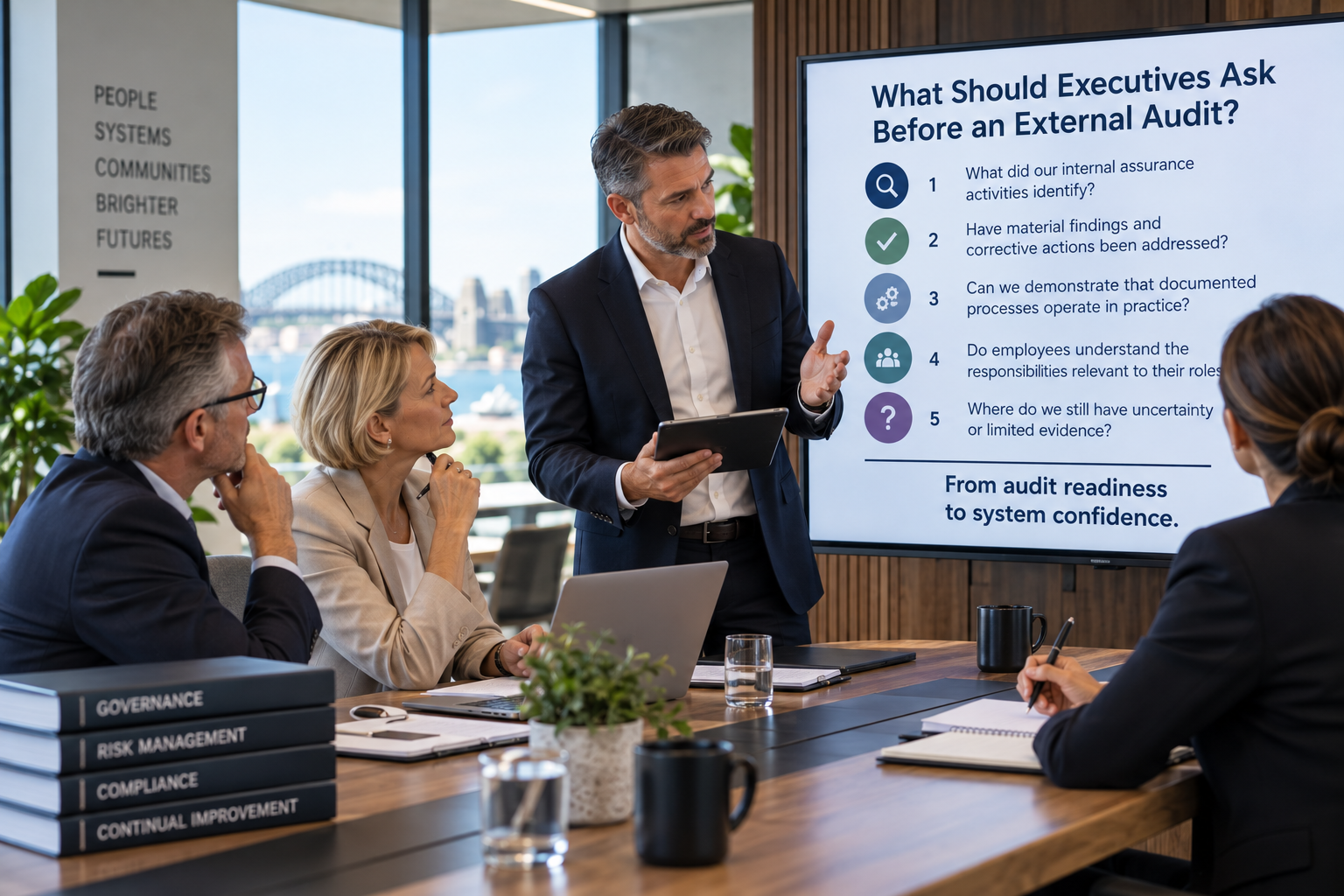
What Should Executives Ask Before an External Audit?
Audit readiness should provide leadership with assurance, not simply reassurance that the documentation is complete.
A practical starting point is:
1. What did our internal assurance activities identify?
2. Have material findings and corrective actions been addressed?
3. Can we demonstrate that documented processes operate in practice?
4. Do employees understand the responsibilities relevant to their roles?
5. Where do we still have uncertainty or limited evidence?
These questions move the conversation from “Are we ready for the auditor?” to “Are we confident in the system?”
Don’t Treat Certification as the Finish Line
Certification can be an important milestone.
It should not become the point at which organisational attention shifts elsewhere.
Management systems need to continue operating between external audits.
Processes change. Employees change. Risks evolve. New obligations emerge. Controls that once worked effectively can become less appropriate as the organisation develops.
Internal audit, management review, corrective action and continual improvement therefore remain important after certification.
A management system is strongest when audit readiness is a consequence of good governance — not a temporary project undertaken before an auditor arrives.

How Integris Group Services Can Support
Integris Group Services helps organisations strengthen the systems behind audit readiness, assurance and continual improvement.
Depending on your organisation’s needs, support may include internal auditing, governance and risk reviews, policy assessment, compliance systems, gap analysis and practical preparation for external assessment.
Our focus is not simply on helping organisations prepare documents for an audit.
It is on helping leaders understand whether the systems behind those documents are working effectively and where improvement is required.

Conclusion
Frequently Asked Questions
What is the difference between an internal audit and an external ISO audit?
Internal audits help an organisation evaluate its own management system and identify opportunities for improvement. External certification audits provide independent assessment against the applicable certification requirements.
Do we need internal audits before ISO certification?
Internal auditing is an important component of management-system assurance and can help identify gaps before external assessment. The specific requirements depend on the ISO standard and certification arrangements involved.
What evidence should we prepare for an ISO audit?
Evidence will depend on the applicable standard and scope, but may include controlled documents, records, internal audit results, management reviews, corrective actions and evidence showing that relevant processes operate in practice.
What are common audit-readiness weaknesses?
Common issues include outdated documentation, unclear responsibilities, incomplete evidence, overdue corrective actions and differences between documented processes and operational practice.
How can Integris Group Services support audit readiness?
IGS can support organisations through internal auditing, gap analysis, governance and risk reviews, policy assessment and practical assurance activities designed to identify weaknesses and strengthen organisational readiness.
Not sure whether your organisation is truly audit-ready?
An independent review can help identify gaps before they become findings. IGS can assess your systems, controls and evidence and help you prioritise the next steps towards stronger audit readiness.