
Internal Auditing Service
A Checklist Can Guide an Audit. It Cannot Think for the Auditor.
ISO 9001 internal audits are an important part of understanding whether a quality management system is operating as intended.
A checklist can provide useful structure.
It can help auditors consider relevant requirements, maintain consistency and ensure important areas are not inadvertently overlooked.
But there is a risk when the checklist becomes the audit.
An organisation can work methodically through a series of questions, confirm that documents exist and record satisfactory responses — while missing weaknesses in how the management system actually operates.
The stronger question is not simply:
Have we checked the requirement?
It is:
What does the evidence tell us about whether our quality management system is effective?
That distinction can transform internal auditing from a compliance activity into a meaningful source of organisational assurance.

Internal Auditing Should Test the System, Not Just the Documentation
Documents are important.
Policies, procedures, records, registers and other controlled information can demonstrate how the organisation intends its quality management system to operate.
But an internal audit should look further.
Auditors need to understand what actually occurs in practice.
That can involve speaking with employees, examining records, following processes from beginning to end, sampling evidence and considering whether controls consistently produce the intended result.
A procedure may be beautifully documented.
The more important question is whether people follow it and whether it works.
This is where internal auditing becomes particularly valuable.
It can expose the difference between documented conformity and operational effectiveness.

Is your internal audit program checking boxes — or providing meaningful assurance?
IGS can help you independently test your management system, identify gaps and turn audit findings into practical improvement priorities.
Start With Scope and Purpose
The existing article correctly identifies scope definition as a fundamental component of an internal audit checklist.
But scope should not simply describe which department or process will be audited.
Before beginning, consider:
- what the audit is intended to establish,
- which processes and requirements are relevant,
- what has changed since the previous audit,
- whether previous findings require follow-up,
- where significant quality risks may exist, and
- what evidence will provide meaningful assurance.
This creates an audit with purpose.
Rather than asking every possible question, the auditor can focus attention where it is most likely to produce useful insight.

Risk Should Shape Where You Look
Not every part of a quality management system presents the same level of organisational risk.
A process that is stable, well controlled and consistently performing may warrant a different level of attention from one experiencing repeated complaints, significant organisational change or recurring nonconformities.
Internal auditing should therefore be informed by risk.
Consider where:
controls are particularly important,
performance is changing,
previous problems have occurred,
responsibilities or processes have changed,
evidence is limited, or
failure could materially affect quality or organisational outcomes.
This does not mean ignoring other requirements.
It means applying audit effort intelligently.
IGS Internal Auditing can support organisations to develop risk-informed audit programs that test both conformity and the effectiveness of the systems behind it.

Build the Audit Around Evidence
A strong internal audit is evidence-led.
Instead of beginning with the assumption that a process works and looking for confirmation, auditors should consider what evidence is needed to reach a reasonable conclusion.
That evidence may come from different sources.
For example, a documented process might establish how something should occur. Records can demonstrate whether it occurred. Interviews can test whether responsibilities are understood. Sampling can help determine whether the process operates consistently.
Individually, each piece of evidence provides part of the picture.
Together, they help the auditor understand the system.
This is why a good audit question often begins with:
“Show me how…”
rather than:
“Do you…?”
The first encourages evidence.
The second can invite a simple yes.

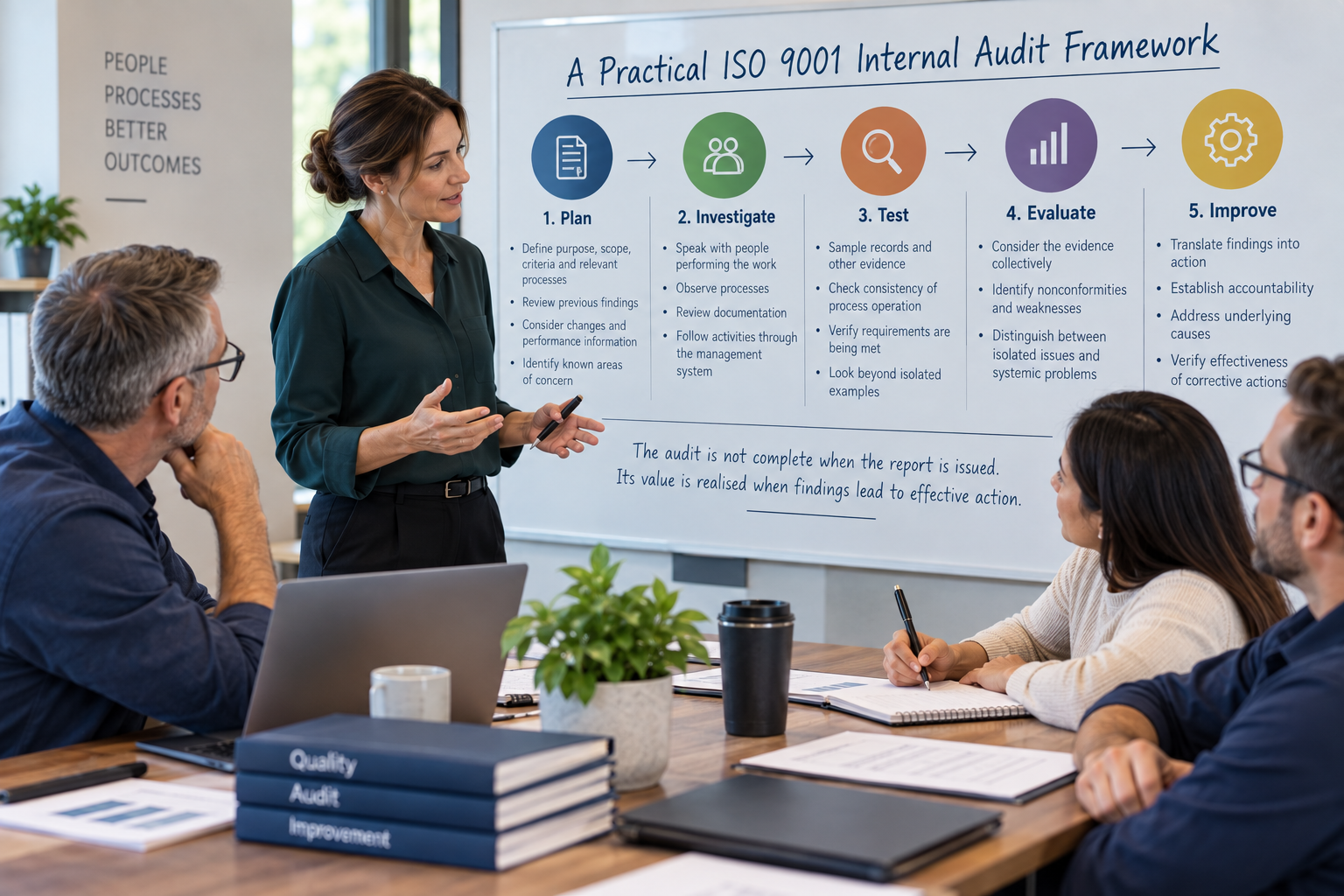
A Practical ISO 9001 Internal Audit Framework
Rather than treating the audit checklist as a long sequence of questions, organisations can structure internal auditing around five connected stages.
1. Plan
Define the purpose, scope, criteria and relevant processes.
Review previous findings, changes, performance information and known areas of concern before fieldwork begins.
2. Investigate
Speak with the people performing the work.
Observe processes, review documentation and follow activities through the management system.
3. Test
Sample records and other evidence to determine whether processes are operating consistently and requirements are being met.
Look beyond isolated examples.
4. Evaluate
Consider what the evidence collectively demonstrates.
Distinguish between isolated issues, nonconformities and weaknesses that may indicate a broader systemic problem.
5. Improve
Translate findings into action.
Establish accountability, address underlying causes where appropriate and verify whether corrective actions actually resolve the issue.
The audit is not complete when the report is issued. Its value is realised when findings lead to effective action.
Findings Should Tell Leadership Something Useful
The original article appropriately emphasises documenting findings, corrective action and communication with management.
The next step is ensuring those findings provide meaningful insight.
A list of minor observations may demonstrate that an audit occurred.
It may not tell leadership what matters.
Audit reporting should help decision-makers understand:
What did we find?
Why does it matter?
Is this an isolated issue or evidence of something systemic?
What needs to happen next?
Who is accountable?
How will we know the issue has been addressed?
This turns the audit report into a governance and improvement tool rather than simply a record of compliance activity.

Corrective Action Is Where the Audit Creates Value
Finding a nonconformity does not improve a management system.
Responding effectively does.
There is an important difference between correcting the immediate problem and addressing why the problem occurred.
If an auditor identifies a missing record, replacing that record may resolve the immediate issue.
But if records are repeatedly missing, leadership may need to understand whether the underlying problem involves process design, accountability, capability, systems or oversight.
Repeated findings deserve particular attention.
They may indicate that previous corrective actions addressed the symptom rather than the underlying cause.
Internal auditing should therefore create a feedback loop:
Finding → Cause → Action → Accountability → Verification → Improvement
That is where continual improvement becomes operational.

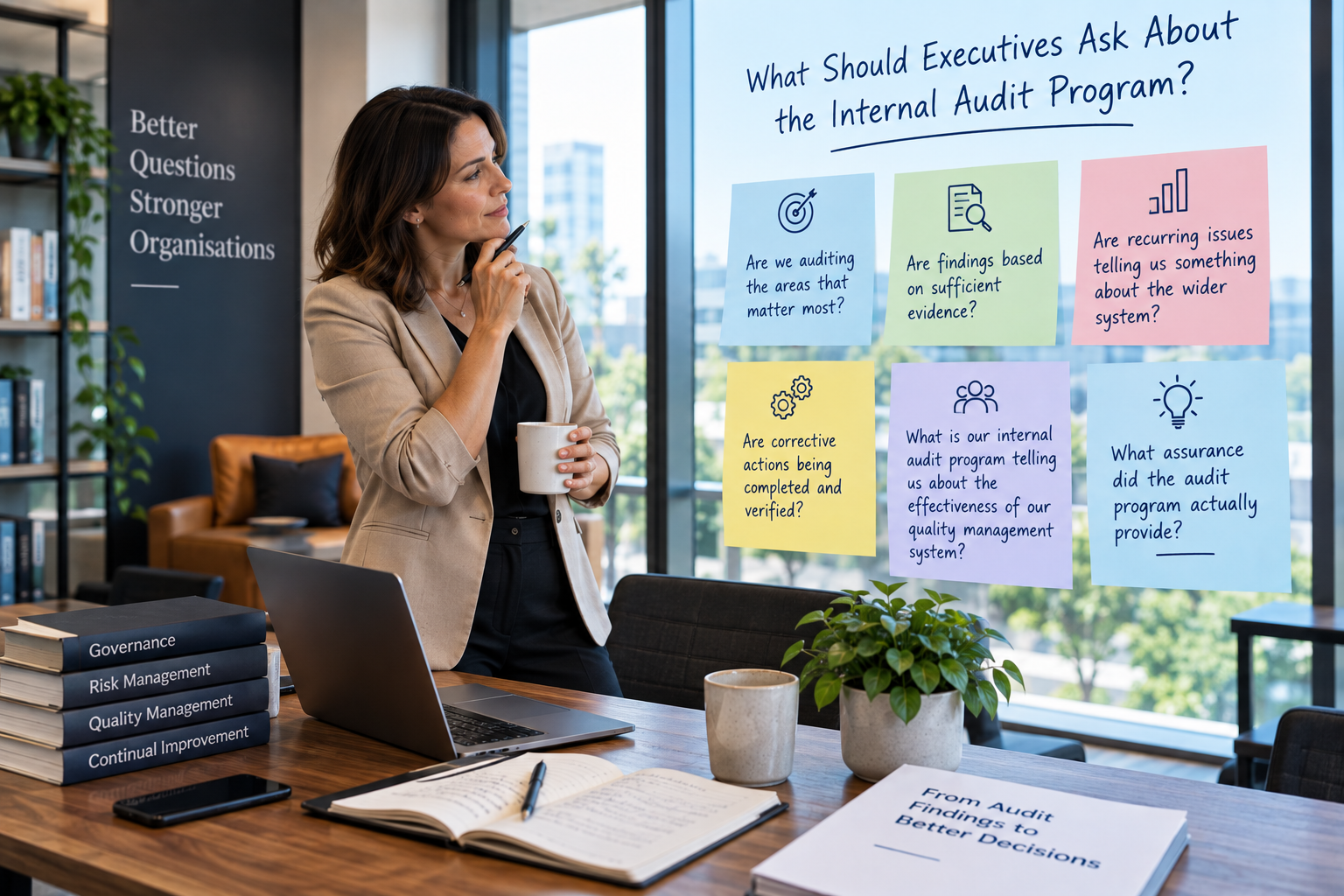
What Should Executives Ask About the Internal Audit Program?
Technology Can Support the Audit — But It Does Not Replace Judgement

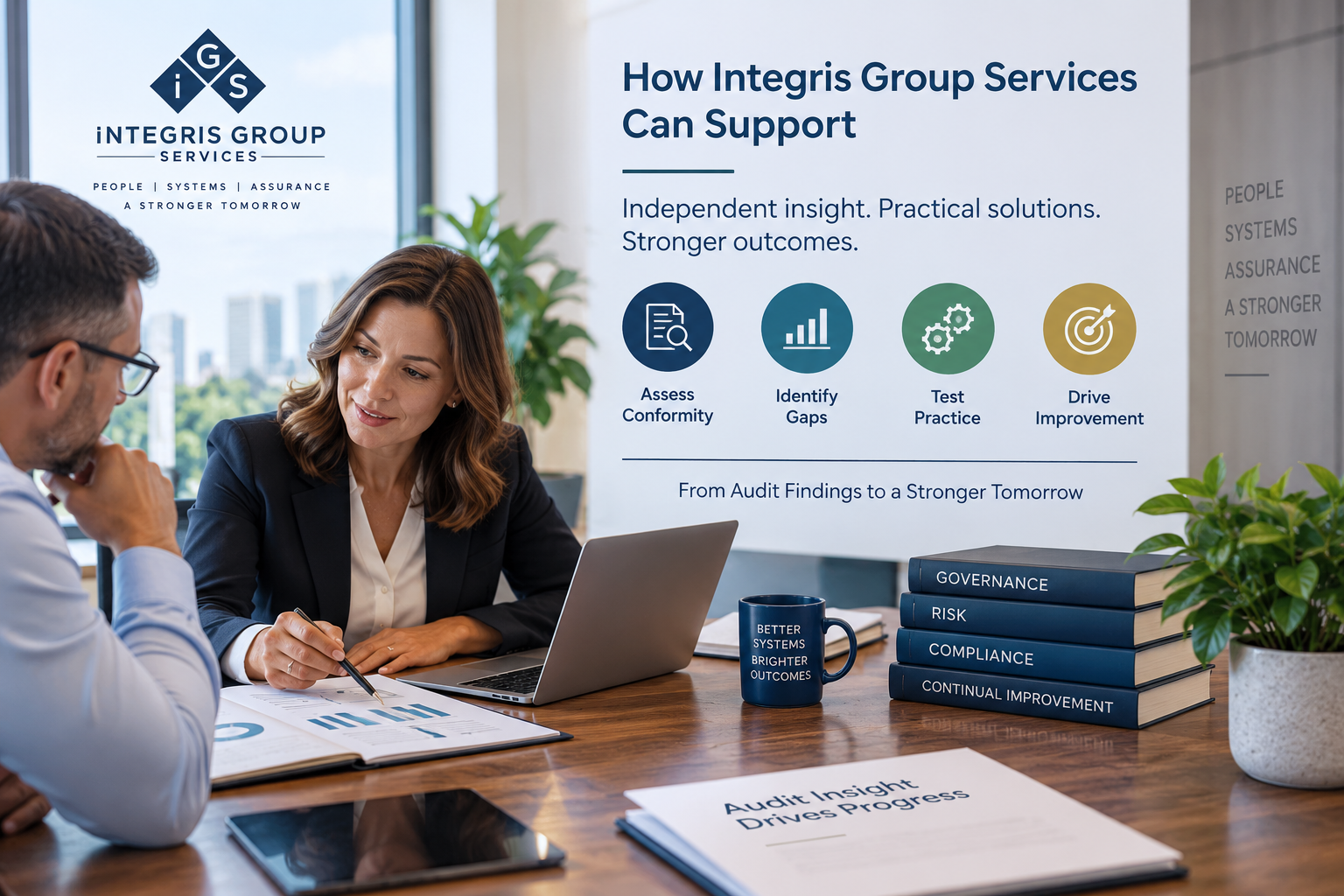
How Integris Group Services Can Support
Conclusion
Frequently Asked Questions
What should an ISO 9001 internal audit checklist include?
The checklist should reflect the audit scope and relevant management-system requirements while helping the auditor examine processes, responsibilities, evidence, controls and opportunities for improvement.
Is an ISO 9001 checklist enough to conduct an internal audit?
No. A checklist provides structure, but an effective audit also requires evidence gathering, interviews, sampling, professional judgement and consideration of how processes operate in practice.
How should risk influence an internal audit program?
Risk can help organisations determine where greater audit attention may be valuable, including areas experiencing change, recurring findings, performance issues or potentially significant consequences if controls fail.
What should happen after an internal audit identifies a problem?
Findings should be evaluated, appropriate corrective actions assigned and completion monitored. Where appropriate, organisations should also consider the underlying cause and verify that actions have been effective.
How can Integris Group Services support ISO 9001 internal auditing?
IGS can provide independent internal auditing support to assess management systems, examine evidence and operational practice, identify gaps and establish practical priorities for improvement.
Not sure whether your organisation is truly audit-ready?
An independent review can help identify gaps before they become findings. IGS can assess your systems, controls and evidence and help you prioritise the next steps towards stronger audit readiness.