

Executive Communication Strategies
Why Good Work Doesn’t Always Get Traction
There’s a moment every team dreads. That is when important work gets presented but the message doesn’t land. The board deck is polished. The metrics are strong. The impact is real. But the outcome? Silence. Delay. Deferral. Deprioritisation.
Important work doesn’t always gain traction, not because it’s wrong, but because it’s lost in translation.
When communication systems aren’t embedded in the way teams work, outputs may reflect effort, but not executive priorities. That’s not a presentation problem, it’s a systems problem.
When systems are structured properly, communication tools are not add-ons, they are integral – and their impact becomes visible across the entire organisation, particularly in connecting delivery and decisions.

The Real Challenge: Connecting Delivery to Decision-Making
Executive communication is a learned practice, rooted in theory that aims to align messages with stakeholder priorities. Executives think in terms of risk, return, and timing. When reports, audits, or proposals miss that framing, even unintentionally, trust, support and momentum can be slow to follow.
This disconnect often occurs because communication is bolted on at the end of delivery, rather than designed into the system itself. When reporting templates, governance artefacts and assurance processes aren’t built with executive decision-making in mind, even high-quality work can lose momentum.
We’ve worked with teams who delivered exactly what was asked of them, but their presentation didn’t pass the next phase of funding. In one case, a nine-month compliance project was stalled because the final pack spoke in process terms when it needed to speak in risk, prevention and urgency. When we helped the client reframe their outputs with the same facts but with a different story, the project was approved to proceed in one meeting.
By restructuring how information was framed and embedded into the final pack, communication shifted from descriptive to decision-enabling — making the impact immediately visible and connecting operational work to executive and strategic intent.

Translating Operations into Executive Value
It’s tempting to think better formatting or punchier language will solve the problem. But at Integris, we take a deeper approach. We help organisations build systems, reporting, and documentation that are already aligned with the expectations of decision-makers. This helps team members draw on established practices, processes, pillars and values for developing executive communication plans including communications training and other business systems and assurance services to help embed value in structure and practice.
When communication principles are embedded into systems — such as reporting cycles, business cases, policy frameworks and assurance processes — teams don’t need to “translate” their work every time. The structure does it for them.
The benefits of this draw from:
- The clarity in how risks are described,
- The logic in how value is framed, and
- The confidence that the right people will see the right things at the right time, in the right language.
That’s the foundation of an effective executive communication strategy.
It’s also why organisations see more consistent outcomes when communication tools are embedded into how work is done, rather than relying on individual capability at the point of presentation.
An NFP we worked with wanted to improve their internal documentation. The ask was clear: better policies. But when we helped them reposition the work as a business case in the context of improved governance, easier onboarding, clearer roles and responsibilities as well as an enabler of audit readiness, the conversation shifted.
It was no longer a tidy-up job. It became a foundational shift in how they delivered internal assurance and the support followed.
Because the communication approach was embedded into governance and assurance systems, the work could be understood, supported and sustained.

The Difference is Embedded, Not Added
When communication tools are embedded into management systems, they become repeatable, reliable and scalable. This reduces noise, strengthens trust, and ensures executives see the information they need — without teams having to reinvent the message each time.
We help organisations build structured systems — reporting templates, decision-support documentation, and training frameworks — that naturally embed executive communication principles. This makes it easier for teams to deliver information in ways that speak to timing, risk, value, and impact.
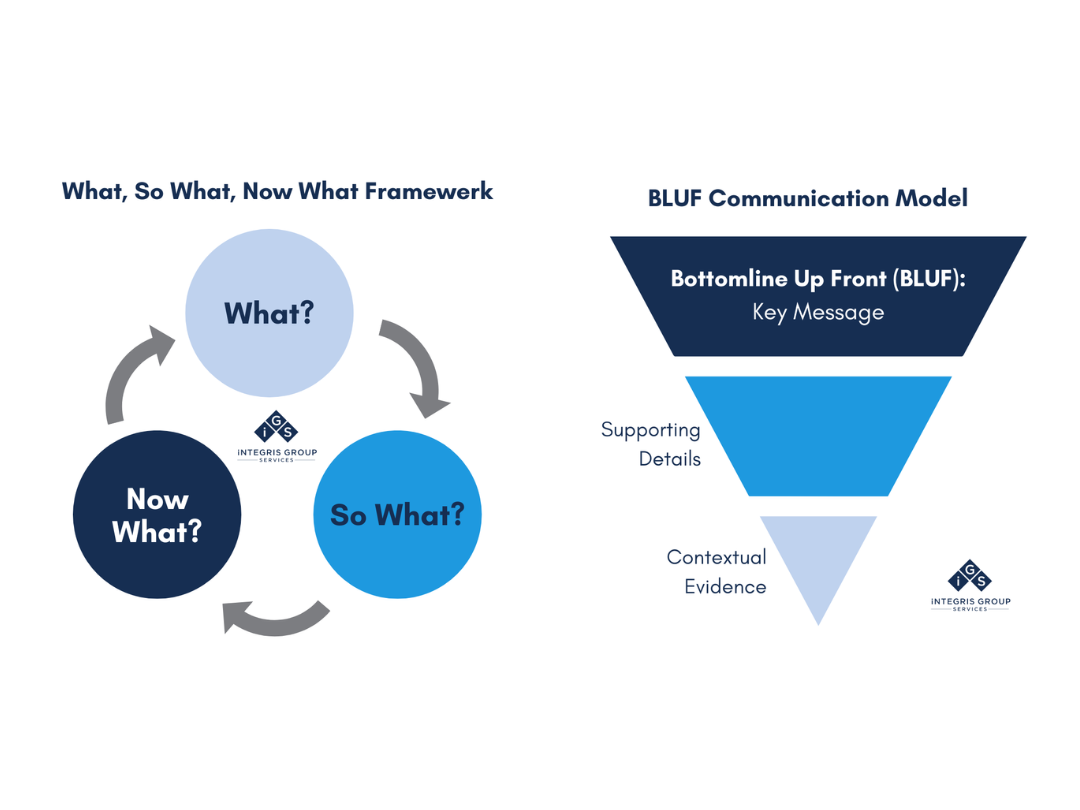
Organisations have used different applications like “What, So What, Now What” or the BLUF communication model , which puts the bottom line up front for decision-making clarity.
Embedding communication isn’t about making your documents prettier. It’s about building systems where clarity, relevance, and traction are designed in from the start. That’s the difference between reactive editing and proactive influence. Just like strong business case should highlight risk and opportunity, the summary pack should enable decision-making, not just describe effort.
For many organisations, building a communication basis in their systems means less noise, clearer signals, and better alignment between what gets done and what gets funded.

Good Work Deserves to Be Supported
The organisations that see the greatest return are those that stop treating communication as an individual skill and start treating it as a system capability.
Boards don’t buy “customer love”, they buy return. But we’d add this: when systems are structured properly, the impact of embedding communication tools into organisational ways of working becomes easier to see.
At Integris, we don’t just help teams present better — we help them design communication into the system. Because when communication is embedded, not added, the value is easier to see, the work moves faster, and decision-makers have the clarity they need to say yes.
If your team is doing the work but struggling to gain support, with executives, auditors, or funders, we can help close the gap.
Frequently Asked Questions
What does ‘speaking executive’ mean?
It’s the ability to translate operational work into outcomes that reflect decision-making priorities including risk, timing, value, and alignment.
How can consulting support business case development?
By ensuring the structure, language and logic of your proposal is built for traction and connected to your broader systems of assurance, compliance and delivery.
What’s the difference between board reporting and internal updates?
Internal reports track activity. Board reports support decisions. The difference is in framing, outcomes and clarity, and it’s where many good projects lose support.
Who benefits from this kind of consulting support?
Any organisation where there’s a gap between what’s being done and what’s being approved. We often support strategy, risk, audit, governance and operational teams with this challenge.
Struggling to get traction with the right decision-makers?
We help organisations translate good work into strategic value; connecting delivery to decisions, and operations to outcomes.